
 Salesforce
 HubSpot
 Claude
.png?width=58&height=58&name=Frame%202087327944%20(1).png) GA4
GA4
.png?width=58&height=58&name=Frame%202087327944%20(2).png) Marketo
Marketo
.png?width=58&height=58&name=Frame%202087327944%20(3).png) Audit Fox
Audit Fox
 Services
How Agreena built four HubSpot pipelines to standardize sales and forecasting
Agreena is a fintech company helping farmers transition to regenerative agriculture while enabling companies to achieve sustainability goals profitably.
Fintech
Copenhagen, Denmark
The challenge
Agreena's HubSpot problems were structural. The platform had been set up without the kind of deliberate architecture that a multi-product, multi-unit fintech company requires — and the consequences showed up in every dimension of how the team tracked, managed, and reported on deals.

With multiple business units operating inside the same HubSpot instance, the absence of a clear structural separation meant that marketing and sales activities from one unit could interfere with or obscure those of another. There was no clean way to track initiatives per unit without risking disruption elsewhere in the system. For a company where different teams were running distinct go-to-market motions simultaneously, that lack of separation made it impossible to understand what was working where.
From the very first touchpoint through to a closed deal or a loss, there was no standardized process governing how contacts moved through the funnel. Different salespeople handled deals differently. Lifecycle stages were inconsistently applied. The absence of a shared framework meant that pipeline data was inherently unreliable — you couldn't compare deals across the team or across time because there was no common language for what each stage meant or when a contact should be in it.
Without consistent deal stages, defined probabilities, or a structured pipeline architecture, Agreena's revenue reporting was built on shaky foundations. Forecasting — a critical function for any company managing multi-product sales cycles — required accurate stage-level data and reliable deal probabilities to produce numbers leadership could act on. Neither existed. The team was flying blind on a function that, in a growth-stage fintech, directly informs investment and resourcing decisions.
Our solution
RevX began with a collaborative workshop — working with Agreena's team to understand the full complexity of their business before designing a structure that reflected it. Everything that followed was built on that foundation.
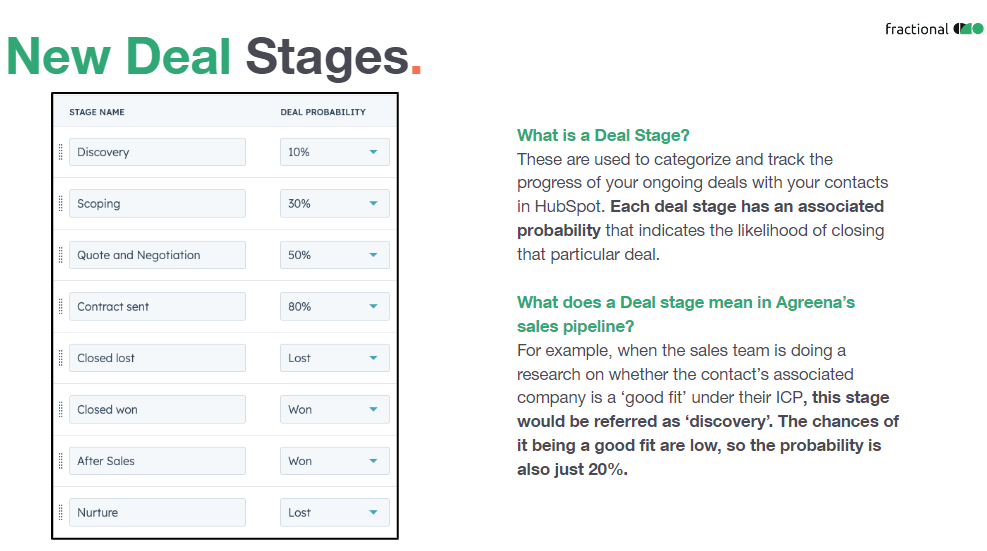
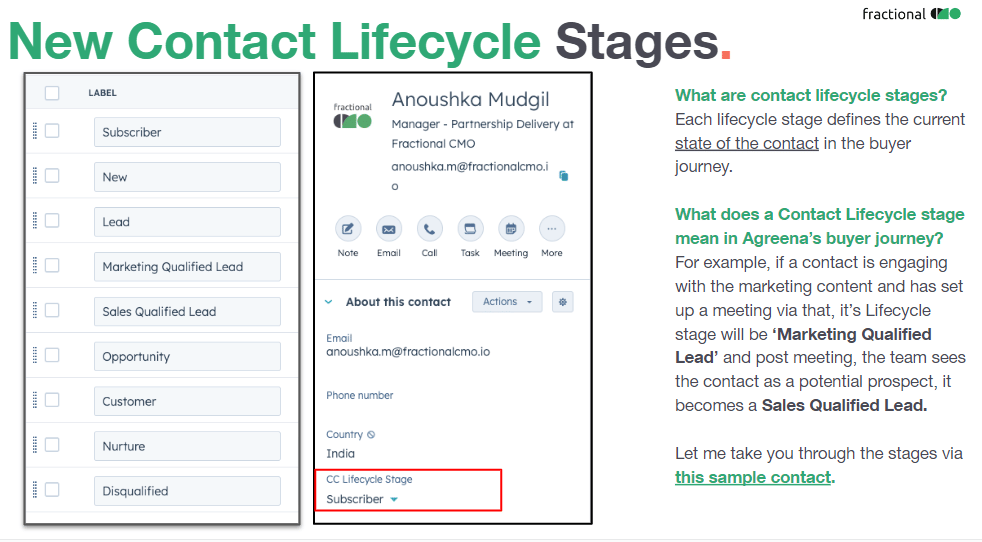
Through comprehensive discussions and brainstorming sessions with the client, RevX defined a new lifecycle and deal stage structure that standardized the marketing and sales funnel from end to end. Each stage was mapped to a specific moment in the customer journey — with clear criteria for when a contact moved from one to the next — giving the entire team a shared framework for how deals should be managed and tracked, regardless of which business unit they sat in.
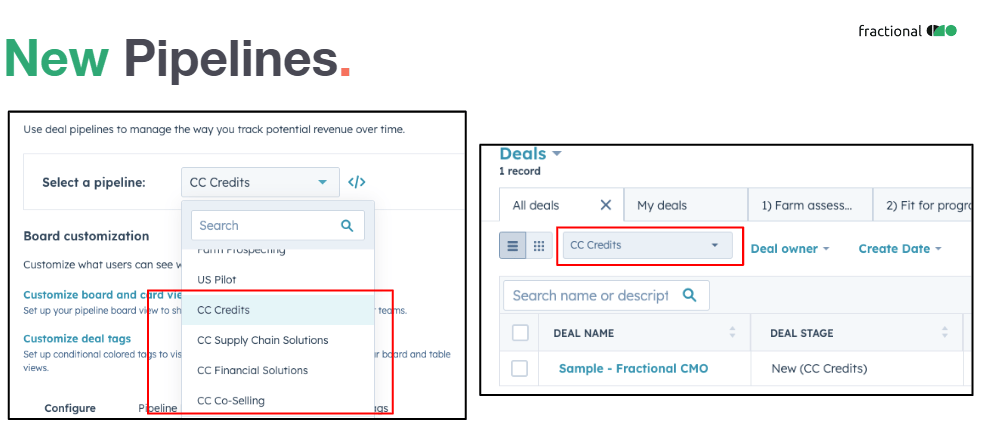
RevX built four distinct pipelines inside HubSpot, each aligned to a specific product or business unit within Agreena's corporate structure. The pipelines were designed to capture the right data points for each line of business, with deal stages segmented within each pipeline and deal probabilities assigned to support accurate revenue forecasting. For the first time, the sales team had visibility into deals organized by the business context that actually mattered — not a single undifferentiated list of opportunities.
The impact
The structural changes RevX made to Agreena's HubSpot environment transformed how the team managed deals, understood performance, and planned for growth — replacing an ad hoc setup with a deliberate, scalable architecture.
With defined lifecycle stages and a consistent deal stage framework in place, every member of Agreena's sales team now works from the same playbook. Contacts move through the funnel in a predictable, documented way. Deals are comparable across salespeople and across time. The shared structure eliminated the inconsistency that had made pipeline data unreliable and gave leadership a version of the sales funnel they could actually trust.
The four pipelines, each with segmented deal stages and assigned probabilities, gave Agreena the ingredients for meaningful revenue forecasting for the first time. Knowing how deals were distributed across stages — and what probability of closing each stage carried — turned forecasting from guesswork into a data-backed exercise. For a fintech navigating multi-product growth, that capability has direct implications for how resources are allocated and how growth targets are set.
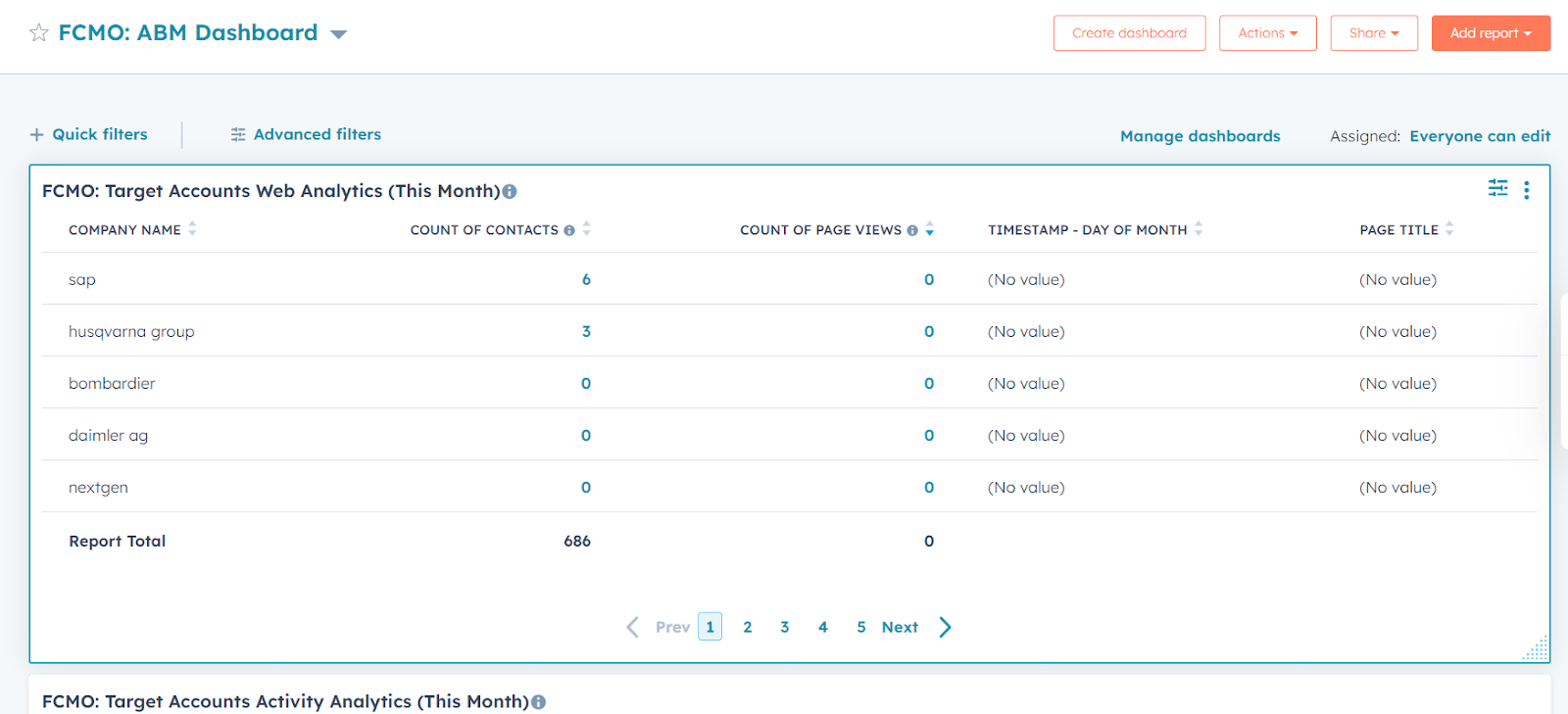
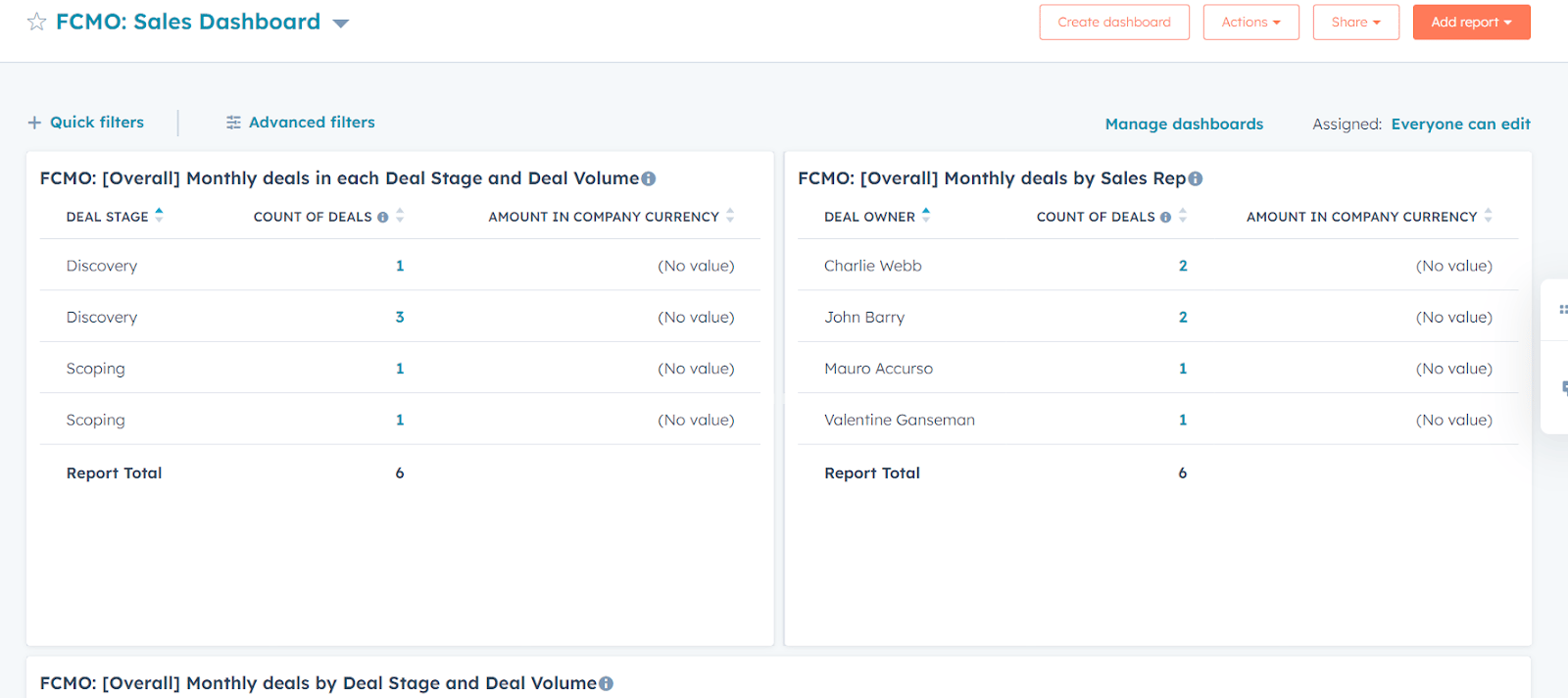
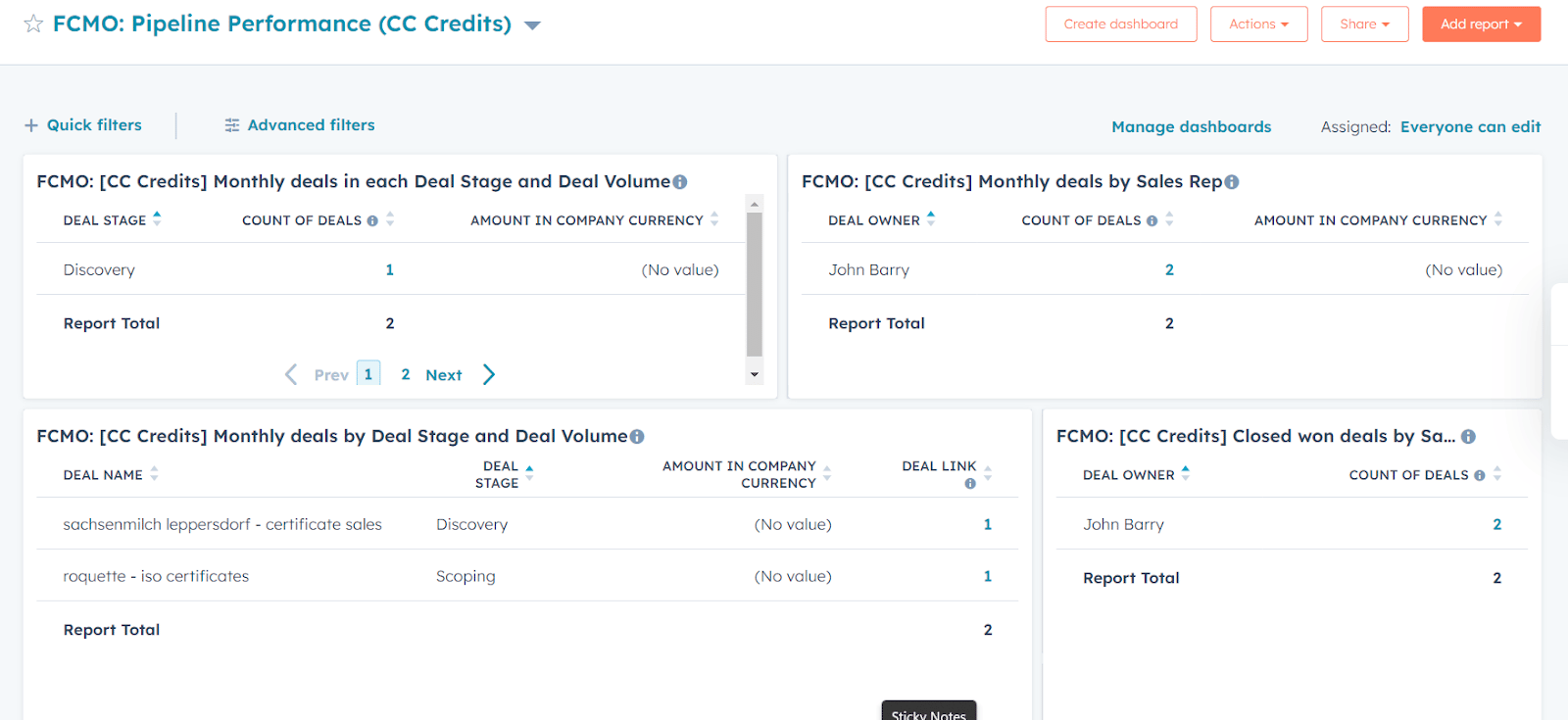
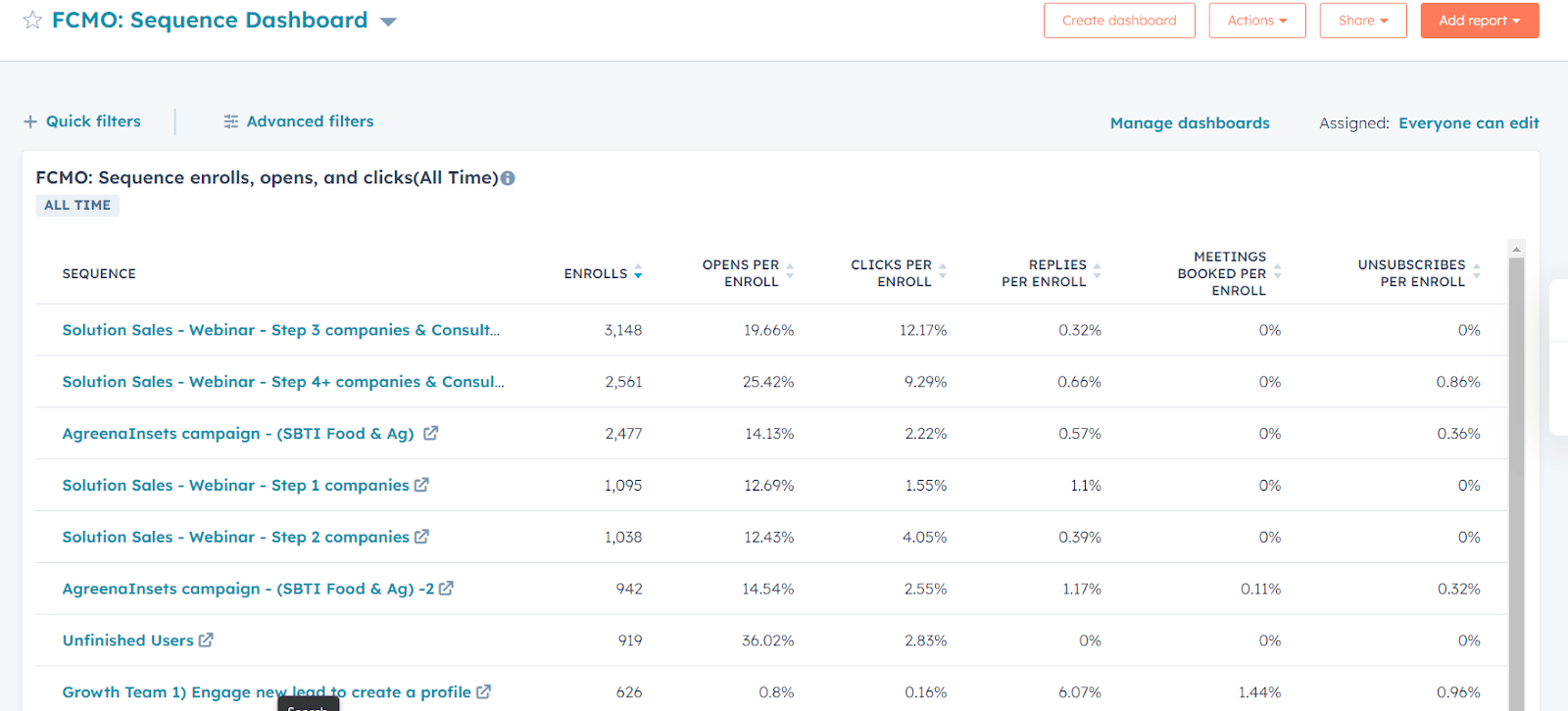
The dedicated dashboards gave each function the visibility it needed without requiring anyone to build reports from scratch. Sales could track pipeline health and individual performance. ABM could monitor progress at the target account level. Leadership could see the full picture in one place. That breadth of reporting — built on data that was now clean and consistently structured — gave Agreena the bird's-eye view of its go-to-market operation that the previous setup had never been able to provide.
Mockup