
 Salesforce
 HubSpot
 Claude
.png?width=58&height=58&name=Frame%202087327944%20(1).png) GA4
GA4
.png?width=58&height=58&name=Frame%202087327944%20(2).png) Marketo
Marketo
.png?width=58&height=58&name=Frame%202087327944%20(3).png) Audit Fox
Audit Fox
 Services
How Galaxy Diagnostics fixed a 40% funnel bleed and gained full revenue visibility
Galaxy Diagnostics offers advanced diagnostic testing solutions for low-abundance flea and tick-borne infections.
Biotechnology Research
Research Triangle Park, NC
The challenge
Galaxy's challenges were interconnected in a way that made each one harder to solve in isolation. A reactive sales team, fragmented data, and a CRM no one trusted had combined to create a pipeline that was leaking revenue at every stage.

Providers would order testing kits or supplies, but payment only occurred once a specimen was returned to the lab — creating a gap where follow-up was critical and tracking was absent. Without visibility into where an order stood or automated reminders to prompt action, a significant share of engaged providers simply fell out of the funnel before conversion. That 40% bleed rate wasn't a demand problem. It was a follow-through problem — and it was costing Galaxy revenue it had already earned the right to collect.
The sales team was operating reactively — without defined pipeline stages, without consistent workflows, without reminders to prompt key touchpoints. Important moments in the provider relationship were being missed not out of negligence but because there was no system to surface them. Deals stalled. Opportunities were lost. And because HubSpot had been poorly set up from the start, the team had little confidence in it — which meant it wasn't being used to its potential even for the basics.
Galaxy had no structured mechanism for evaluating which providers were likely to become repeat customers — making forecasting and resource allocation more intuition than analysis. Compounding this, there was no visibility into revenue at the order or provider level. Galaxy couldn't see what an individual order was worth, compare it to what was actually received, or make data-driven decisions about where to invest sales effort. For a growing diagnostics company, that blind spot had real consequences.
Our solution
RevX approached this as a comprehensive infrastructure rebuild — starting from a clear picture of the ideal customer journey, then building the HubSpot environment to support it end to end, from first provider contact through to revenue recognition.
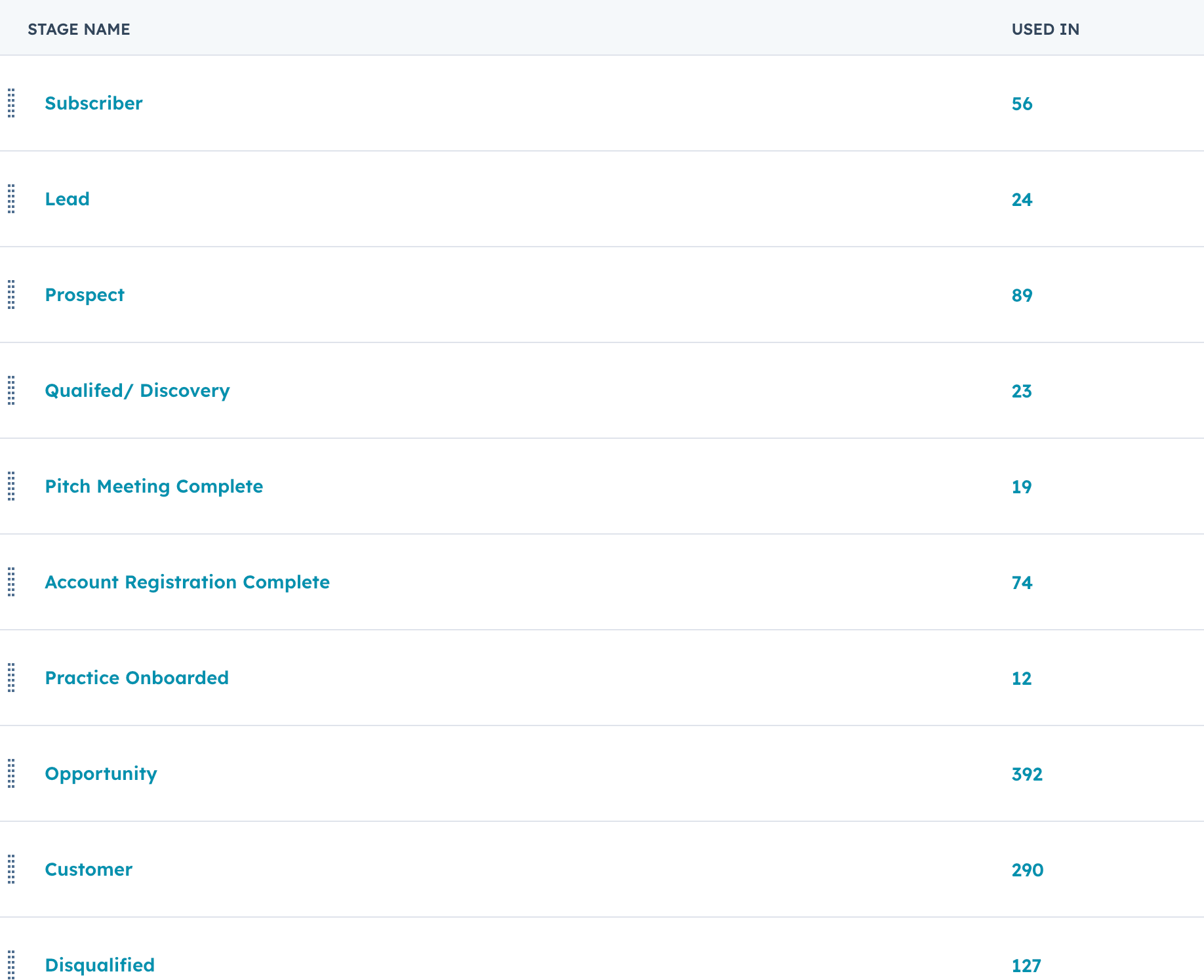
RevX replaced Galaxy's disorganized legacy pipeline with a clearly defined deal pipeline, complete with stage-based automations that tracked deal progress and triggered timely follow-ups. Orders could no longer slip through without action. Every transition in the pipeline prompted the right task for the right person — shifting the sales team from reactive to proactive and closing the gap where that 40% bleed had been occurring. Website forms were also updated functionally and visually, with branded styling and cleaner data capture that routed order information directly into pipeline automations.
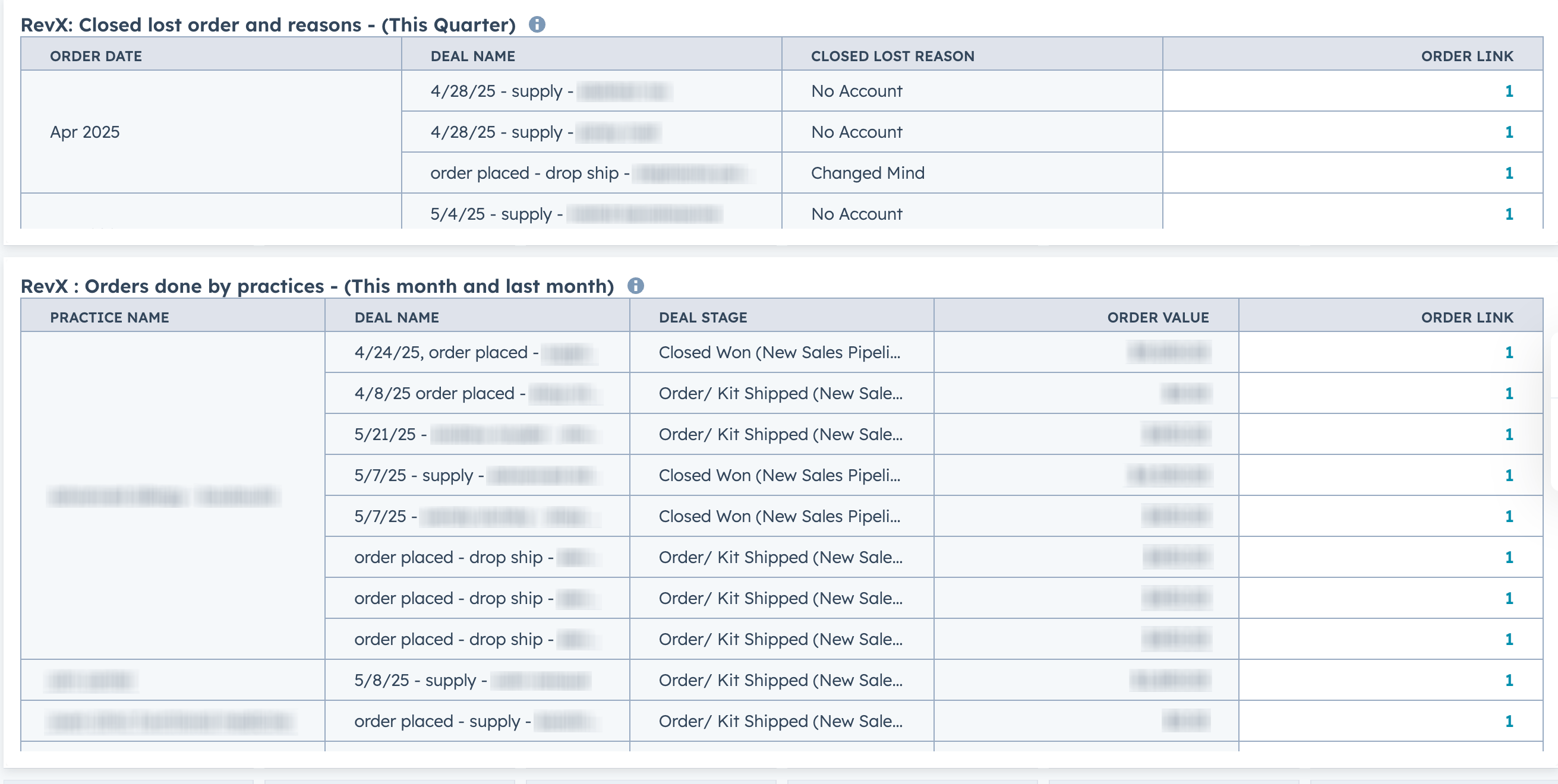
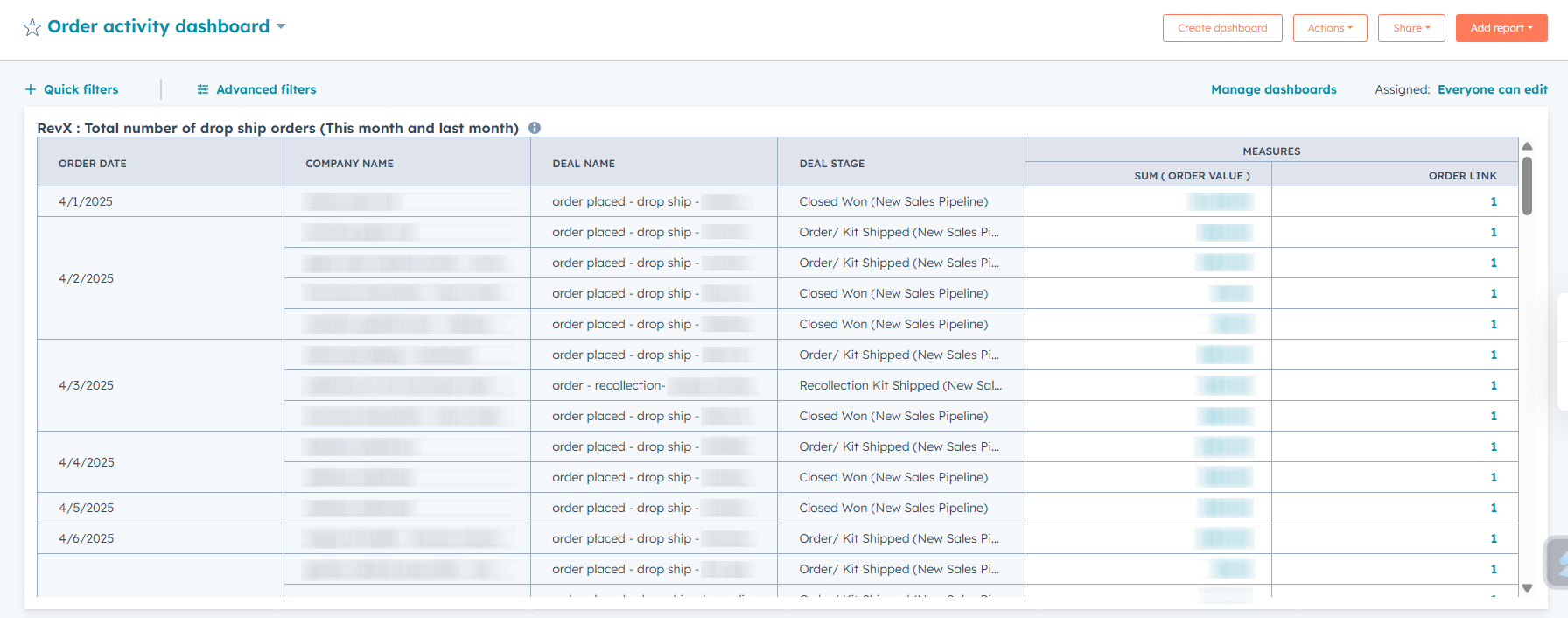
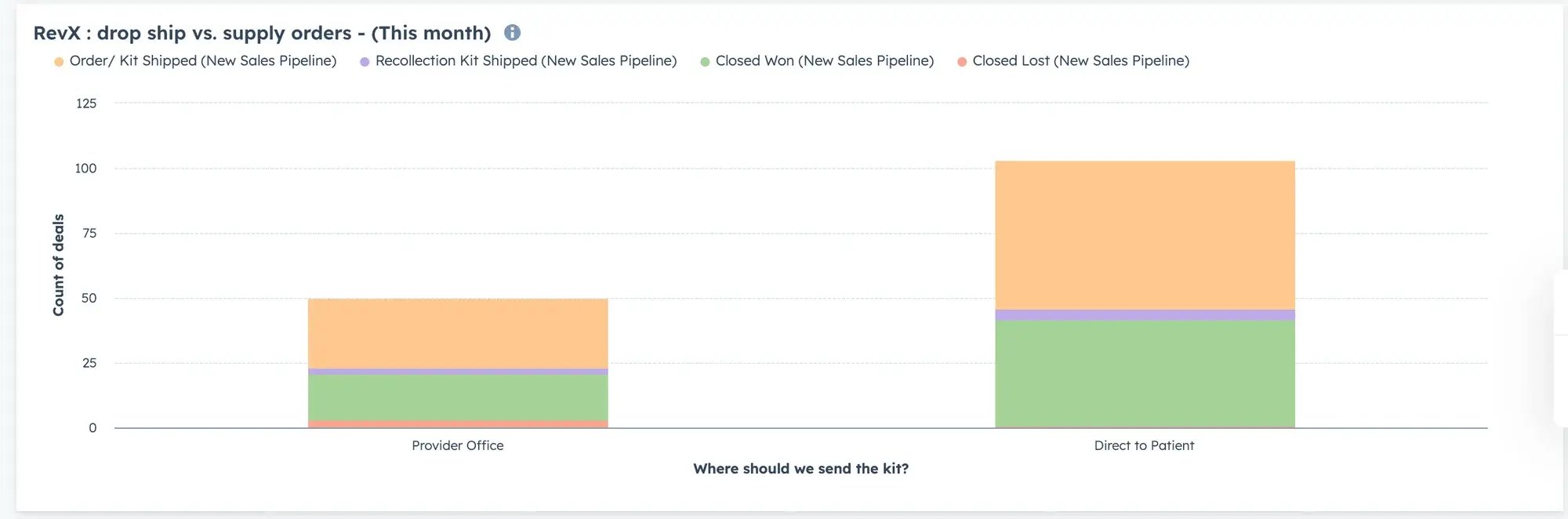
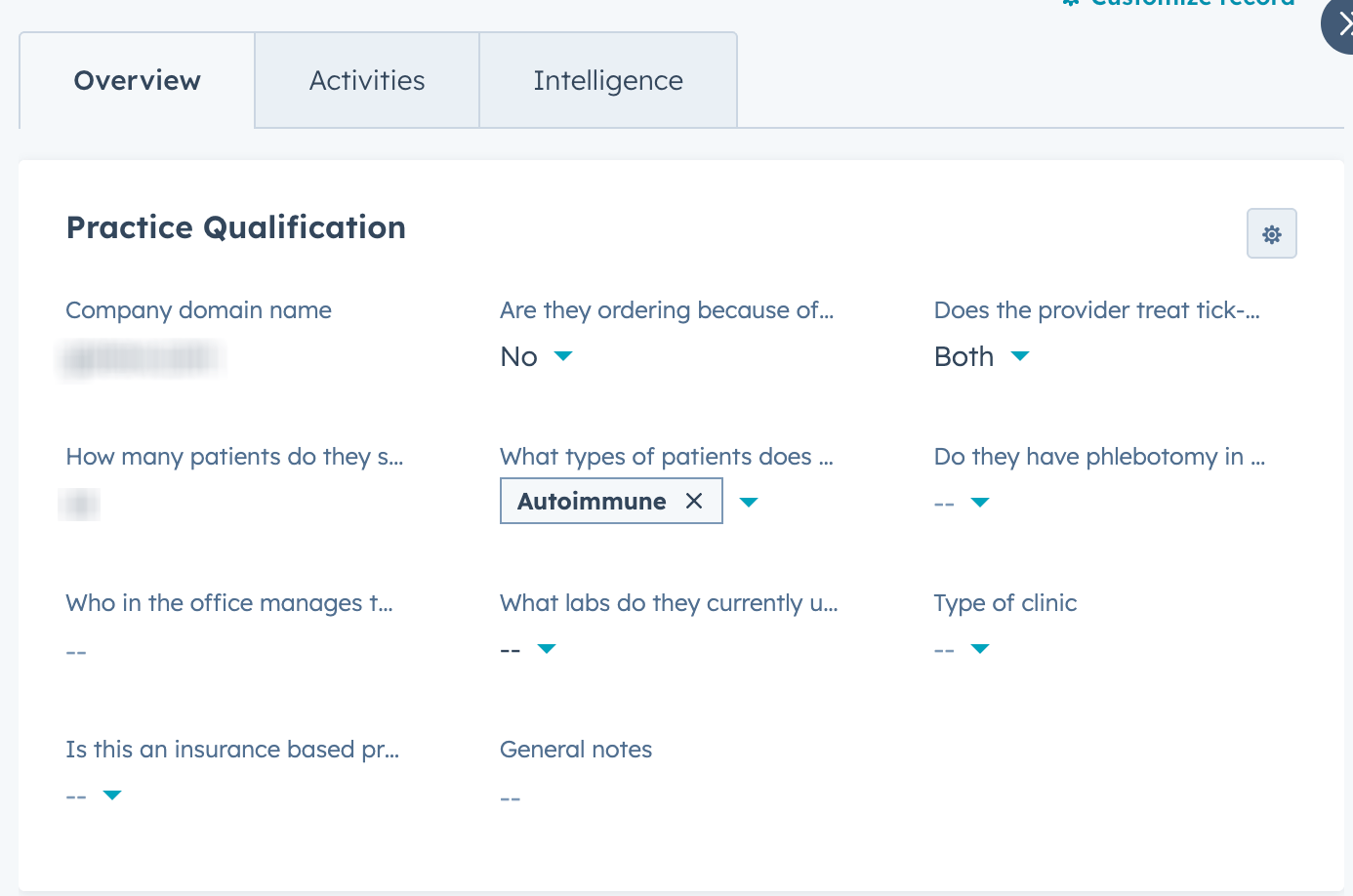
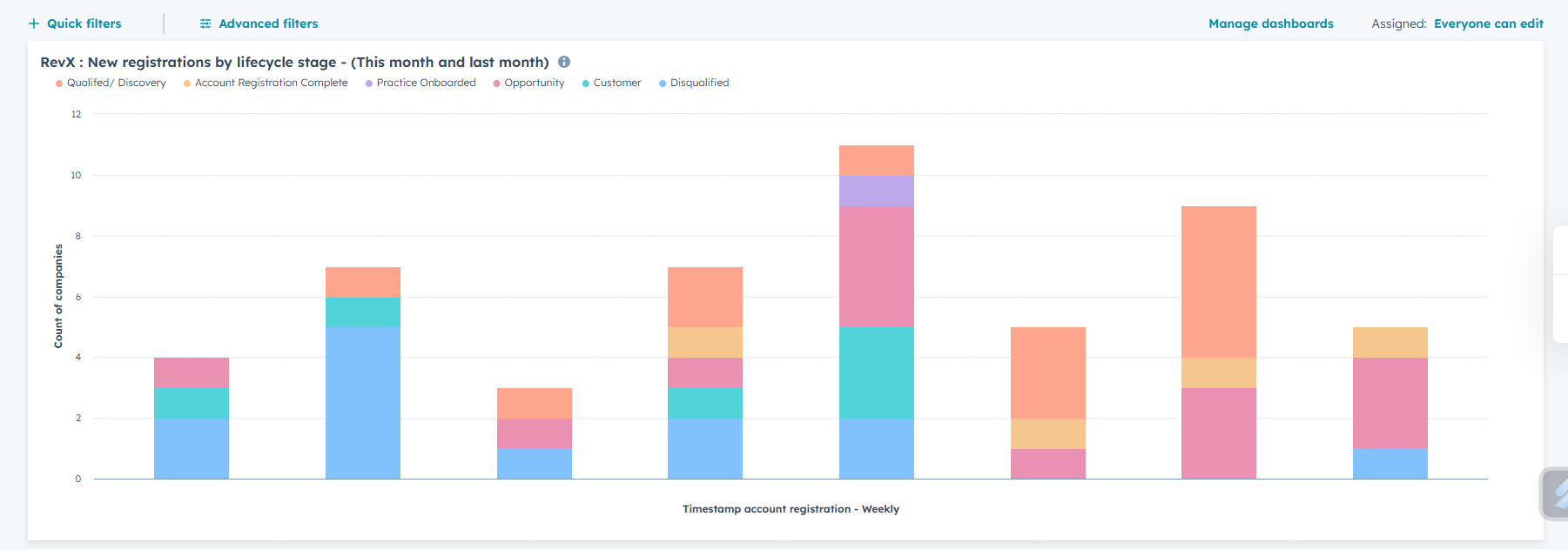
RevX used calculated properties and third-party data imports to make revenue visible inside HubSpot for the first time — showing each order's actual and potential value directly within deal and contact records. A structured provider qualification workflow was built to give the team a centralized, consistent view of each provider's likelihood to place repeat orders. Custom dashboards were developed for day-to-day operational use and a dedicated C-suite dashboard was built to surface high-level metrics for executive decision-making. The engagement closed with on-demand documentation and training videos to ensure the team could sustain and build on the new setup independently.
The impact
The overhaul transformed how Galaxy Diagnostics managed its provider relationships and commercial operations — shifting from a reactive, fragmented setup to a structured, data-driven growth platform.
With automated task assignments, deal stage tracking, and timely notification triggers in place, the order journey that had been hemorrhaging leads is now tracked from placement to fulfillment. The mechanisms that allowed 40% of engaged providers to slip away — missed follow-ups, no visibility into order status, no reminders — have been replaced with a system that surfaces the right action at the right moment for every deal in the pipeline.
For the first time, Galaxy's team can see the value of each order inside HubSpot, compare it to actual revenue received, and understand the financial picture at the provider level. That capability — seemingly basic, but previously entirely absent — changes how the team prioritizes outreach, allocates resources, and forecasts growth. Commercial decisions can now be grounded in data rather than estimates.
The combination of a well-configured portal, clearly defined lifecycle stages, structured qualification workflows, and practical training transformed the team's relationship with HubSpot. What had been experienced as administrative overhead became a system people trusted and used — because it was built around how Galaxy actually works, not around how HubSpot works out of the box. That shift in confidence is perhaps the most durable outcome of the engagement.
Mockup