Advertising

How Idegy connected HubSpot and QuickBooks to automate invoicing and collections
Idegy - Case Study Thumbnail_2
Company overview

Idegy creates contemporary branded merchandise with strong recall value, backed by round-the-clock logistics operations.  

Industry

Advertising

Headquartered

Columbus, Ohio 

Context

Idegy runs on relationships and reliability — branded merchandise delivered with the kind of logistical precision that keeps clients coming back. But behind the scenes, the financial side of those client relationships was running on manual effort. Invoices were created by hand in QuickBooks. Sales data and financial data lived in separate systems that didn't talk to each other. Overdue payments went untracked until someone remembered to check. And the sales team had no automatic visibility into when invoices were issued, leaving follow-ups to chance rather than process. The disconnect between HubSpot and QuickBooks wasn't just an operational inconvenience — it was creating delays, reducing collection rates, and pulling the team away from work that actually drove the business forward.

RevX came in to bridge that gap with a custom integration and automated workflow system built around how Idegy actually operated.

The challenge

Idegy's operational challenges were centered on the boundary between sales and finance — the point where a closed deal transitions into an invoice, a payment, and a financial record. That handoff was entirely manual, and the absence of automation at that juncture created compounding inefficiencies across every deal the business closed. 
glass-Chart-icon
Invoices created manually, one by one, through QuickBooks
Every invoice required someone to open QuickBooks, locate the relevant deal information, and create the document by hand. In a business closing multiple deals at any given time, that process consumed hours the team could have spent elsewhere — and introduced the kind of human error that manual data entry reliably produces. There was no trigger, no automation, and no connection to the deal data already sitting in HubSpot that should have been generating the invoice automatically. 
glass-Chart-icon
Sales and financial data in separate silos with no sync between them
HubSpot held the sales data. QuickBooks held the financial data. Without an automated sync connecting the two, the information in each system reflected a different, incomplete version of the same reality. Deal stages in HubSpot didn't update when invoices were paid. Payment status in QuickBooks wasn't visible to the sales team. The result was a business making decisions from fragmented data, with teams working in parallel rather than in concert. 
glass-Chart-icon
No system for flagging overdue invoices or prompting follow-up
When an invoice went overdue, there was no automated mechanism to flag it, notify the relevant salesperson, or send a reminder to the client. Follow-up depended on someone manually checking payment status — which, in a busy team managing multiple accounts, meant overdue invoices could go unaddressed for longer than they should. That gap had a direct impact on collection rates and cash flow, as well as on the client relationships that timely communication helps protect. 

Our solution

RevX began with a thorough assessment of Idegy's existing sales and invoicing processes before designing the integration — ensuring the solution was shaped around the specific ways the business operated rather than a generic template. 
glass-Chart-icon
A custom HubSpot-QuickBooks integration built for Idegy's workflow
RevX designed and implemented a bespoke integration plan that connected HubSpot and QuickBooks, establishing an automated flow of contacts, products, and invoice data between the two platforms. The integration was built to reflect Idegy's specific business requirements — ensuring that the data moving between systems was accurate, relevant, and mapped correctly to the records on each side. The data silos that had characterized the previous setup were replaced by a unified, real-time view of each client's sales and financial status. 
glass-Chart-icon
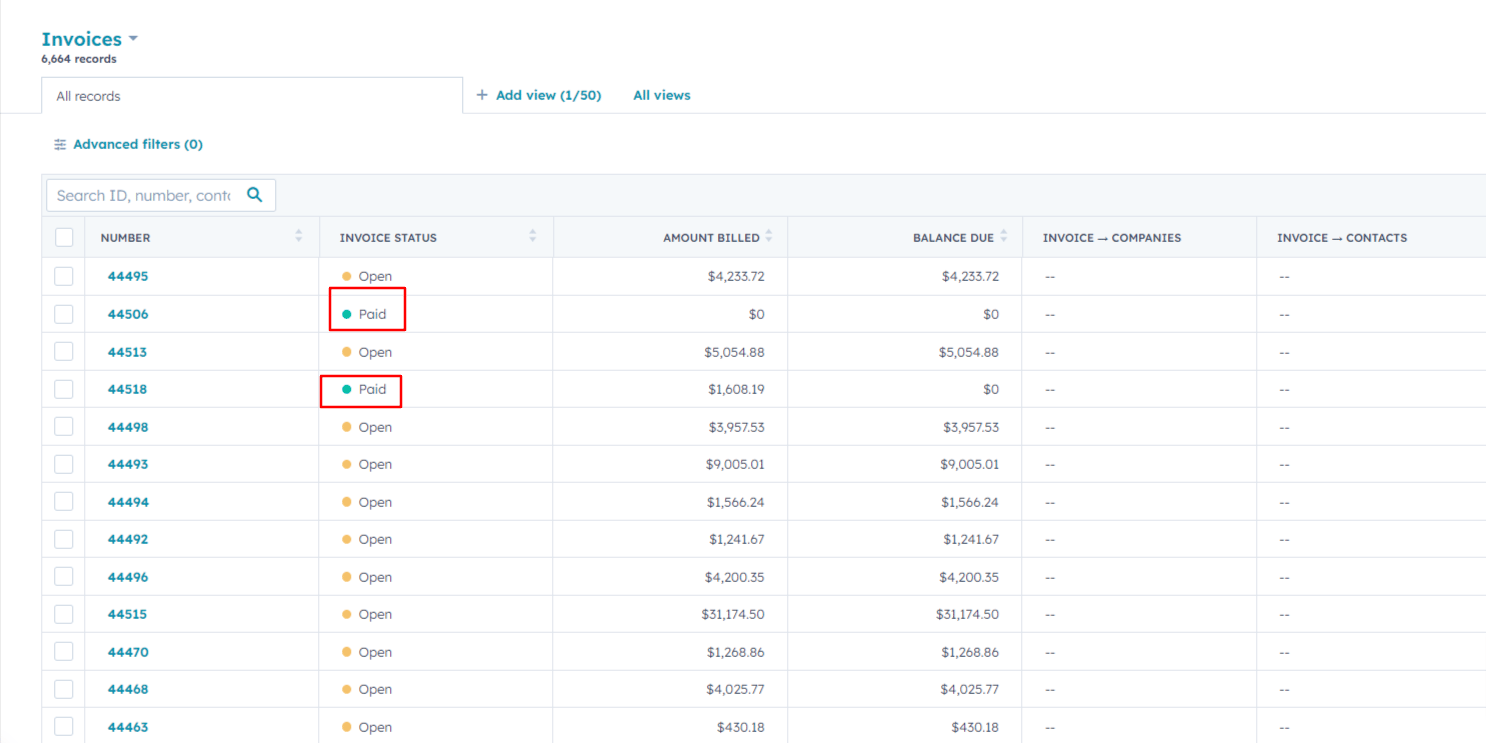
Automated invoice creation and tracking within HubSpot
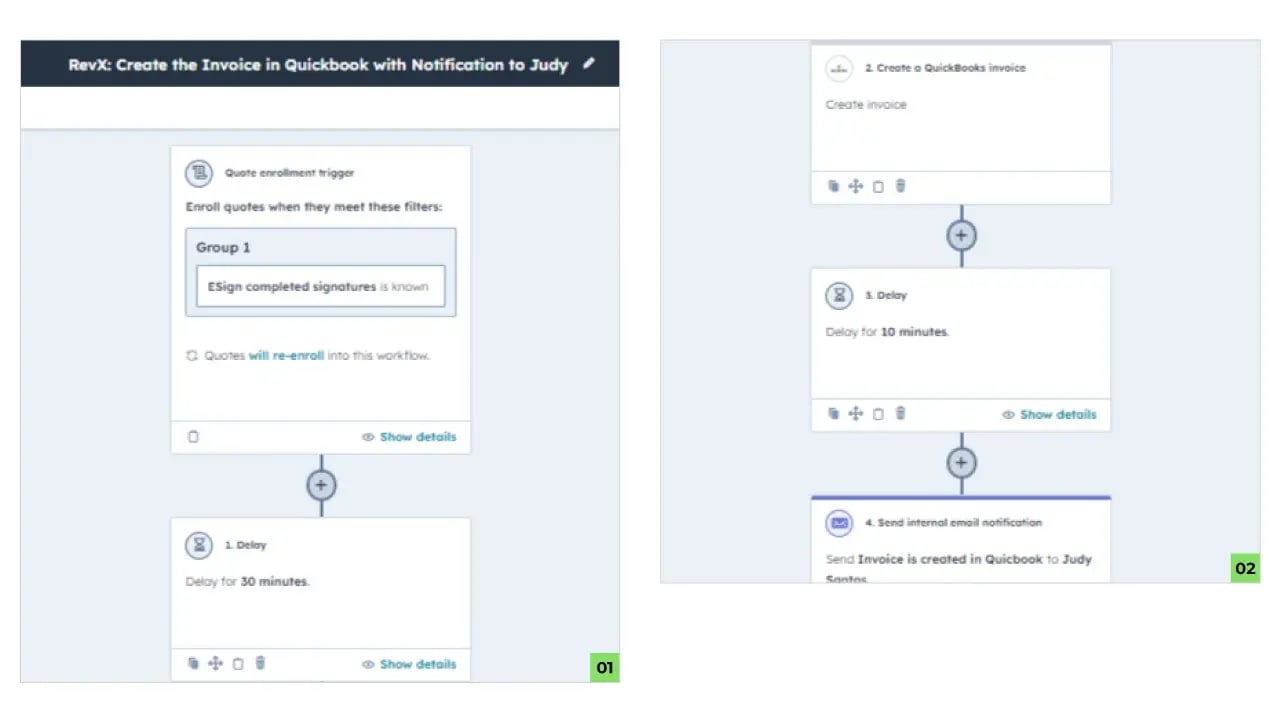
Invoices could now be created and tracked directly inside the HubSpot ecosystem, triggered automatically by deal stage changes rather than requiring manual QuickBooks entry. The workflow automation removed the human step between a deal closing and an invoice being issued — reducing the time between those two events, eliminating the manual effort involved, and ensuring financial records in QuickBooks reflected the current state of deals in HubSpot. 
glass-Chart-icon
Notification workflows and overdue alerts that kept the team ahead of payments
RevX built a robust notification system that alerted the relevant salesperson each time an invoice was created, enabling prompt, informed follow-up with clients. An overdue alert system was layered on top — flagging past-due invoices visually in red and automatically sending reminders to the associated contacts. The combination of salesperson notifications and client reminders created a proactive collections process that no longer depended on anyone remembering to check. 

The impact

Connecting HubSpot and QuickBooks and automating the invoicing workflow changed how the team worked across both the sales and finance functions — reducing manual burden, improving collections, and ensuring data was available when decisions needed to be made. 

glass-Chart-icon
Invoicing no longer a manual task, human effort significantly reduced

With invoice creation automated as a downstream consequence of deal progression, the time and effort previously absorbed by manual QuickBooks entry was recovered entirely. The process that had been a recurring administrative obligation became invisible — handled by the system, consistently, without anyone having to do it. That reduction in human effort compounded across every deal the team closed. 

glass-Chart-icon
Timely follow-ups and stronger client engagement
Automated salesperson alerts meant that follow-up happened promptly after every invoice was issued — not when someone happened to check. That responsiveness improved client engagement by keeping communication consistent and professional at every financial touchpoint. In a business built on long-term client relationships, the reliability of that follow-up process mattered beyond its immediate impact on collections. 
glass-Chart-icon
Better collection rates and real-time data for smarter decisions

The overdue alert system — with visual flagging and automated client reminders — made a measurable difference to Idegy's collection rates by ensuring that overdue invoices were surfaced and acted on before they became significantly delayed. At the same time, the automated data flow between QuickBooks and HubSpot gave the team access to accurate, current financial information at all times — improving the quality of decisions across sales, finance, and operations simultaneously. 

Stats

The new PPC setup helped the company achieve top ranks in high intent keywords and re-target existing customers, yielding a notable increase in revenue. 
2x
revenue within the first 6 months

Mockup

idegy 1
idegy 2

Also read

laptop-mockup3
Media & Entertainment technology

Amagi

 Amagi is a global leader in cloud-based SaaS tech for broadcast & connected TV. 
laptop-mockup3
Media & Entertainment technology

Amagi

 Amagi is a global leader in cloud-based SaaS tech for broadcast & connected TV. 

Curious to know the latest
RevOPS trends?

Subscribe to our newsletter.