
 Salesforce
 HubSpot
 Claude
.png?width=58&height=58&name=Frame%202087327944%20(1).png) GA4
GA4
.png?width=58&height=58&name=Frame%202087327944%20(2).png) Marketo
Marketo
.png?width=58&height=58&name=Frame%202087327944%20(3).png) Audit Fox
Audit Fox
 Services
How FreshLearn generated $200K and 3,000+ beta customers in six months with a digital marketing overhaul
FreshLearn is a no-code platform that lets creators build, market, and sell digital products on their own branded websites.
EdTech
India
The challenge
FreshLearn's challenges were the kind that are easy to defer until a launch makes them unavoidable. A product release concentrates attention on every gap in the go-to-market operation simultaneously, and for FreshLearn, three gaps converged at exactly the wrong moment.

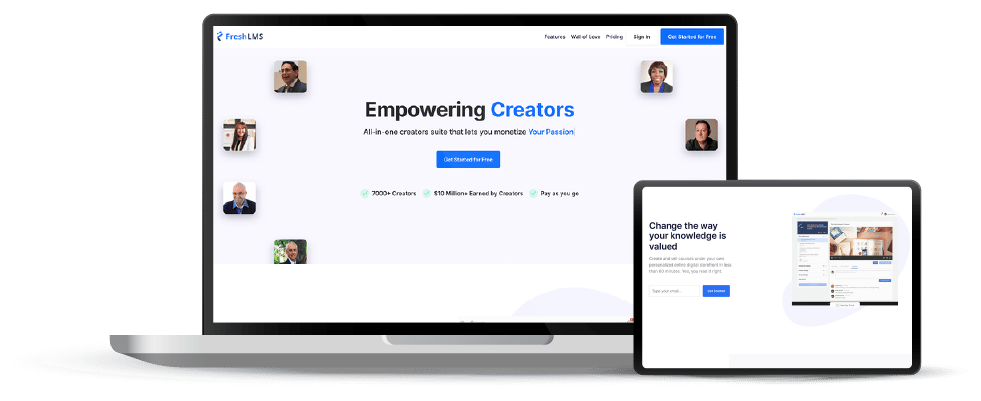
The existing website wasn't reflecting what FreshLearn actually was or who it was for. In a market where the first impression a creator forms of a platform happens on the website, an outdated, off-brand digital presence was quietly costing the company the credibility it needed to convert early visitors into early customers. A platform that promises ease of use needs a website that demonstrates it — and FreshLearn's didn't.
The team had no structured approach to social media or email marketing — no calendar, no cadence, no segmented audience data feeding campaigns. For a creator-focused product whose audience lives on social platforms and responds to email-based community building, the absence of that infrastructure meant the launch would happen without the audience warmth that a pre-launch social and email program builds. The product was ready; the audience wasn't being prepared.
There was a disconnect between what the marketing activity was doing and what the business needed it to achieve — but without a structured mechanism to surface that gap and close it, the misalignment persisted. Decisions were being made without the kind of market-based product validation that tells you whether your assumptions about positioning, messaging, and audience fit are correct. FreshLearn needed a feedback loop, not just a marketing plan.
Our solution
RevX approached the engagement across three parallel workstreams — website, social and email infrastructure, and market validation — with the product launch as the coordinating deadline that shaped the pace and sequence of everything.
RevX created a new website prior to the product launch — built to reflect the brand's identity and speak directly to the creator audience FreshLearn was targeting. Rather than treating the launch website as a finished product, RevX monitored its performance for three months post-launch and then designed and launched a revamped version informed by what the data showed about how visitors were engaging. The website was treated as a hypothesis to be tested, not a deliverable to be signed off.
RevX created a structured quarterly social media calendar that gave FreshLearn a consistent, planned presence across its channels — replacing the absence of process with a repeatable rhythm. Email campaigns were developed and executed using well-segmented data from LeadSquared, ensuring that the right messages reached the right audience segments rather than going out as undifferentiated broadcasts. The social and email program was built to build the audience before and alongside the launch, not after it.
The impact
Six months after launch, FreshLearn had generated $200K in revenue and acquired more than 3,000 beta customers — results that reflected the compounding effect of a website that worked, an audience that had been built, and a marketing strategy that had been grounded in real product validation.
The combination of a well-positioned website and a structured social and email marketing program drove $200K in revenue within six months of the product going live. That number represents the return on having the marketing infrastructure in place before the launch rather than scrambling to build it after. A product entering a market with its digital presence and outreach program already performing starts generating revenue from a running start, not a standing one.
The social media calendar and segmented email campaigns translated into more than 3,000 beta customers — a community of early adopters whose adoption validated the product and whose feedback shaped what came next. For a no-code platform whose growth depends on creator word-of-mouth and community, that early customer base wasn't just a revenue number. It was the foundation for everything that would follow.
Mockup